
SuperPlane has raised a $2.6M pre-seed round to help engineering teams safely absorb the speed of AI-generated software.
The round was led by Credo Ventures, with participation from First Momentum Ventures and angel investors including Mirko Novakovic, CEO of Dash0; Tomas Kratky, founder of Manta; Andreas Klinger of Prototype Capital; and other builders of modern infrastructure, developer tools and AI-native software companies.
The funding will be used to accelerate product development, deepen work with design partners and early customers and grow the open-source ecosystem around SuperPlane.
SuperPlane is building an open-source automation engine and AI-first control plane where human engineers and AI agents can collaborate safely on production infrastructure workflows. It gives engineering teams a programmable layer for the work that happens after code is written: reviews, testing, deployments, infrastructure orchestration, approvals, incident response, rollback paths, observability feedback and operational decision-making.
Darko Fabijan, CEO and Marko Anastasov, CPO, previously built Semaphore, a developer infrastructure company used by engineering teams at companies including Confluent, Replit and Superhuman.
The bottleneck has moved
For decades, software organizations were designed around one constraint: people wrote the code.
That shaped the systems around engineering teams: ticket queues, review gates, CI pipelines, release trains, approval chains, deployment runbooks, incident procedures and on-call rotations. These were not accidents. They were the machinery required to ship software safely when change moved at human speed.
That constraint is changing.
AI coding tools can now generate, modify, test and explain code faster than most organizations can review, validate, deploy, observe and operate it. Engineering teams are no longer constrained only by how quickly software can be written. Increasingly, they are constrained by everything that needs to happen after the code exists.
A pull request still needs to be reviewed. A preview environment still needs to be created. Tests still need to run. Infrastructure changes still need to be checked. Risk still needs to be understood. Deployments still need approvals, health checks, rollback paths and communication. Incidents still need context. Production systems still need humans who can make high-quality decisions under pressure.
AI has made software creation faster. It has not automatically made software organizations better at operating the systems that software depends on.
That is the problem SuperPlane is solving.
AI needs an operational layer it can trust
The next phase of engineering will not be defined only by better coding assistants. It will be defined by whether organizations can safely turn intent into production change.
That requires a different model from “let the agent do everything.”
Infrastructure teams know from experience that even a small configuration change can cause serious downtime. Production systems are complex, interconnected and full of organizational knowledge that often lives in Slack threads, dashboards, runbooks, tribal memory and the heads of senior engineers.
In that environment, fully autonomous AI is not enough. Engineering teams need systems that let agents participate without removing human judgment, policy, visibility, or control.
SuperPlane exists to make that operational layer programmable.
It does not replace the tools engineering teams already trust. It orchestrates them. It does not hide production behind a chat box. It gives humans and agents a shared control plane for running engineering workflows together.
Policies, approvals, deployment patterns, risk checks, incident procedures, feedback loops and operational knowledge become explicit workflows. They become visible, versioned, auditable and executable.
This is the next layer of platform engineering: a runtime for how software organizations work.
What SuperPlane is building
SuperPlane is an open-source automation engine for event-driven engineering workflows.
It sits between code generation and production infrastructure, helping teams model the work of software delivery as deterministic, inspectable workflows. Human engineers interact through the console and generative UI. AI agents can interact through APIs, the CLI and Model Context Protocol. Both operate inside the same guardrails.
SuperPlane workflows can connect the systems engineering teams already use: Git repositories, CI/CD tools, cloud infrastructure, observability platforms, communication tools, incident systems, LLMs and internal services.
A single SuperPlane App can catch a GitHub pull request, create an ephemeral preview environment on AWS, run tests, calculate risk, request approval, deploy, monitor production health, trigger a rollback and feed the result back to the engineers and agents working on the next change.
This is more than automation as a script. SuperPlane provides a durable execution engine for multi-step operational workflows. If a deployment fails halfway through, the system knows what ran, where it stopped, what failed and what should happen next. Every execution becomes part of the organization’s operational memory.
That distinction matters. Automation runs tasks. Autonomy requires context, policy, memory and clear boundaries between what agents can do and where humans must decide.
SuperPlane gives teams that boundary.
SuperPlane today
SuperPlane is open source, built in the open and available today.
The SuperPlane Cloud beta gives teams the fastest way to run SuperPlane in production. It includes managed runners, Git-backed Apps, a visual workflow canvas and a built-in platform engineering agent that can help build workflow graphs, debug execution failures and manage app repository files while respecting permission boundaries.
SuperPlane already includes hundreds of integration components across tools such as AWS, GCP, GitHub, GitLab, Slack, PagerDuty, Datadog, OpenAI, Claude and more. Teams can use it to build workflows for AI-driven code review, release management, operational dashboards, incident response, infrastructure orchestration, continuous feedback loops and production deployment guardrails.
We are also working with Confluent as a design partner as we shape the product with teams operating complex production systems.
Why now
AI makes it cheaper to create code. That changes what engineering organizations need from their infrastructure.
When code volume increases, the answer cannot simply be more manual coordination, more approvals, more Slack messages, more dashboards and more tribal knowledge. That model does not scale.
The organizations that succeed in the AI era will be the ones that can encode how they operate. They will turn their best practices, deployment rules, approval paths, incident procedures and production feedback loops into workflows that humans and agents can both understand and execute.
Small teams should be able to operate with the leverage of a dedicated platform organization. Large organizations should be able to let agents move faster without losing standards, safety, or control. Open-source communities should be able to share operational patterns the way developers already share libraries.
SuperPlane is building the control plane for that future.
A world where intent becomes workflow, workflow becomes execution and every execution makes the organization better at shipping the next change.
The team
SuperPlane was founded by Darko Fabijan, Marko Anastasov, Lucas Pinheiro, Aleksandar Mitrovic, Igor Sarcevic and Petar Perovic.
Darko and Marko first met at university in 2003 and have spent more than two decades building together. Before SuperPlane, they built and scaled Semaphore, one of the early pioneers in continuous integration and testing. Semaphore helped drive the adoption of container-based infrastructure and grew into a platform processing millions of jobs for engineering organizations including Intuit, Toyota Connected, Confluent, Replit and Superhuman.
That experience shaped the founding team’s view of what modern infrastructure requires. They have seen what happens when systems grow, workflows become critical and engineering teams need speed and safety at the same time.
SuperPlane is built from that experience. It carries forward the same focus on reliability, control and operational depth, now applied to a new era where AI agents and human engineers work together to manage production systems.
SuperPlane is now a team of 12 focused on expanding the ecosystem and growing SuperPlane Cloud.
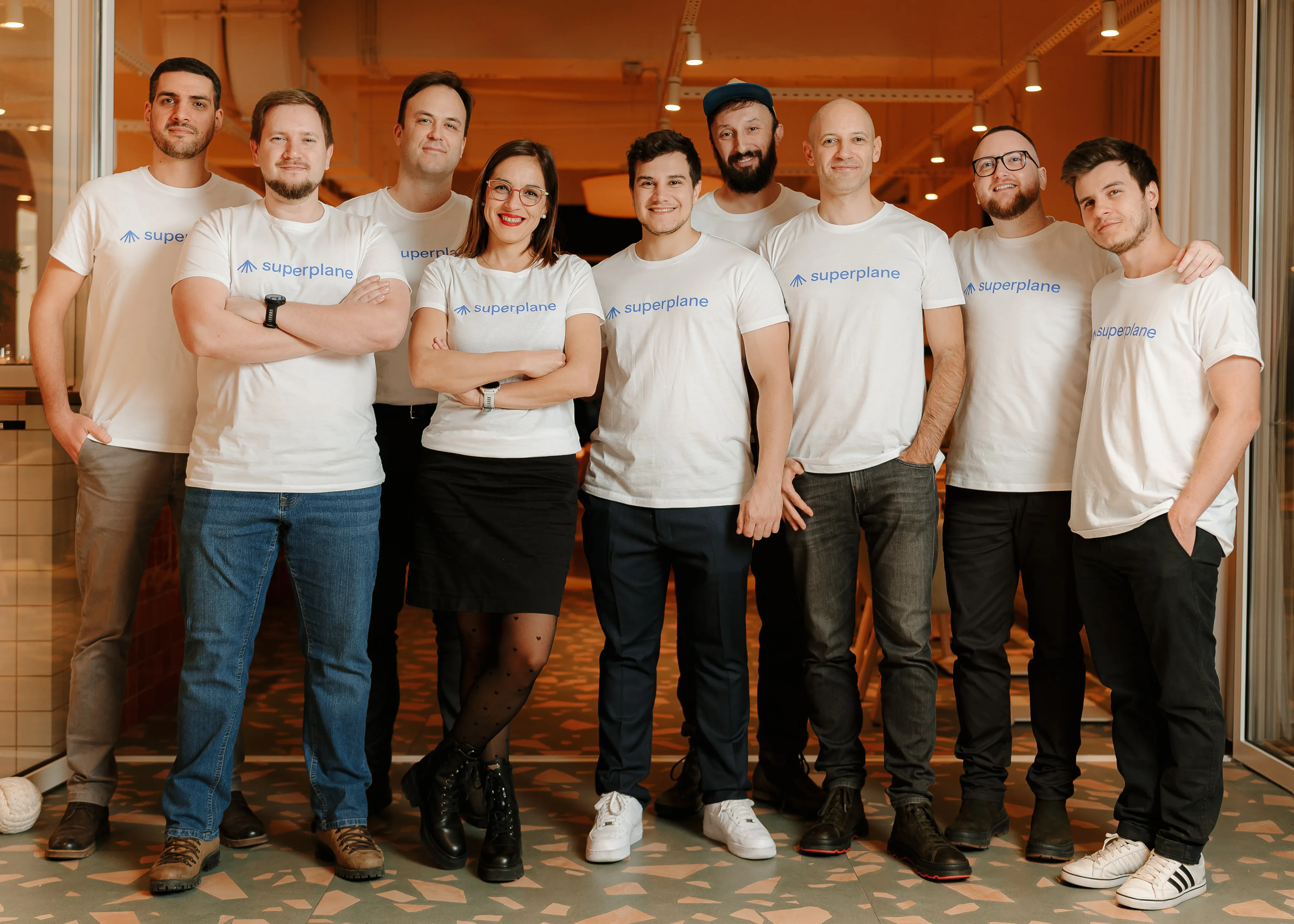
Darko Fabijan, CEO of SuperPlane, said:
“AI is changing how software gets built, but the bigger challenge is what happens next. Engineering teams are about to face far more change flowing toward production and the answer cannot be more manual coordination or more tribal knowledge. The future of operations is supervised automation through systems engineers can trust.
SuperPlane gives humans and agents a shared control plane for production workflows, with the context, guardrails and deterministic execution needed to operate safely. We are building toward a future where engineering organizations can move at the speed of AI without losing control of the systems they depend on. This funding helps us accelerate that work with our design partners, early customers and open-source community.“
Matěj Míček, Partner at Credo, said:
“At Credo, we invest in the best teams with a relationship to Central or Eastern Europe, wherever they are in the world. We believe Darko and Marko have seen greatness while building Semaphore and selling its product to the likes of Confluent and Superhuman.
Today, we already know for sure that the world of software development will never be the same. We are currently experiencing the shift in how code gets written, but the DevOps layer is yet to change. We are convinced Darko and Marko have been at the state of the art for long enough to make it happen.“
Christian Neumann, Principal at First Momentum, said:
“At First Momentum, we are actively seeking startups that are building the infrastructure engineering organizations need to deploy AI-generated code at scale and SuperPlane is exactly what we had in mind. Their control plane gives engineering teams the guardrails and confidence to ship 10x the code they could before, safely. That’s not a marginal improvement; it’s a step change in how software gets delivered.
What makes this even more compelling is Darko and Marko. Few founding teams combine the depth of domain expertise and the shared entrepreneurial history these two bring, with nearly 20 years of building together. We are absolutely thrilled to join paths with them and can’t wait for the journey ahead.“
Get involved
SuperPlane is open source and we are building it in the open.
You can try SuperPlane Cloud today, explore the project on GitHub, read the documentation, or join the community on Discord.
Follow SuperPlane on X and LinkedIn for updates.
Our investors
Matěj Míček, Partner at Credo; Christian Neumann, Principal at First Momentum.
Angel investors
Andreas Klinger (PrototypeCap), Igor Bogicevic (Culture Amp), Mihajlo Grbovic (Airbnb), Mirko Novakovic (Dash0), Nenad Božić (SmartCat), Alexandre Yazdi and Noé Gersanois (YG Ventures), Peter Zaitsev (Percona), Stanislas Polu (Dust), Tim Sadler (Tessian), Tomas Kratky (Manta).